Guide 01
The New Forest turns into a fungal city every autumn
Hampshire's New Forest is grazed common land, ancient pasture-woodland and one of the most productive fungi habitats in Western Europe, all at once. Come the damp weeks of autumn, its floor and deadwood produce a volume and variety of fruiting bodies that draws mycologists as reliably as it draws dog walkers who have simply noticed something odd and red on the verge.
What's actually happening
The New Forest's unusual richness comes from its age and its lack of intensive management: centuries of grazing by ponies and cattle, huge amounts of standing and fallen deadwood, and a mix of ancient oak, beech and open heath that supports fungi in numbers rarely matched elsewhere in lowland Britain. Mycologists have logged more species here, across decades of survey work, than in almost any comparable stretch of English woodland. Most of that diversity is invisible for eleven months of the year, living as thread-like mycelium underground or inside rotting wood, and only becomes visible when autumn's combination of cooling soil and reliable rain triggers fruiting.
What to look for
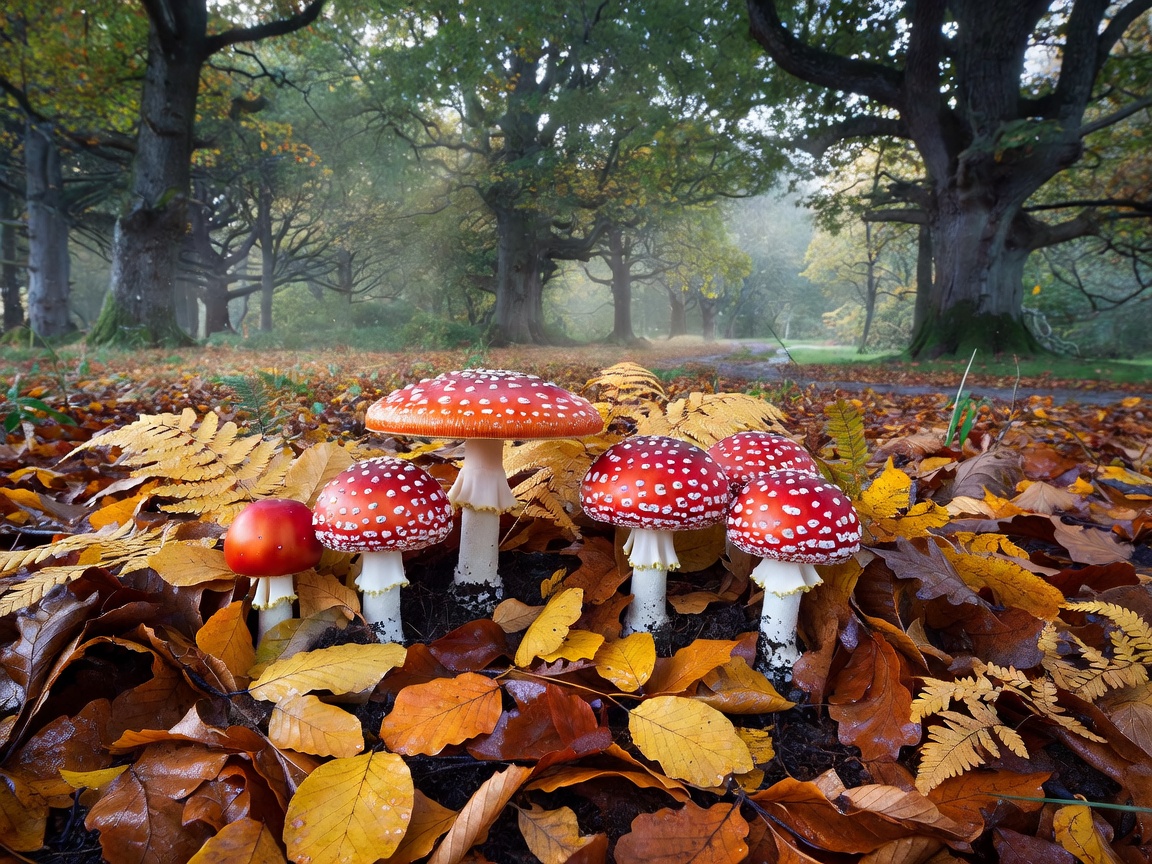
The fly agaric, Amanita muscaria, is the one everyone photographs: white-spotted red cap, usually under birch. Penny bun (Boletus edulis, sold commercially as porcini) and a wide range of other boletes turn up under oak and beech. Chanterelles, various milkcaps, and the aptly named stinkhorn all appear through the same weeks. None of this is a private tip — the forest's fungus displays are well known enough that Forestry England runs guided fungus walks in some years, though availability changes season to season and is worth checking directly rather than assuming.
The picking rules
The New Forest is not a free-for-all. Local byelaw guidance restricts personal fungi picking to a modest daily amount intended for a single household's use rather than commercial quantities, and picking is prohibited entirely in some areas set aside for conservation or ongoing research. The rules exist because sustained heavy picking can measurably reduce fruiting in following years, and because much of the forest's fungal interest is precisely the point of protecting it. If you plan to pick anything to eat, treat identification as the serious part of the exercise: several boletes and amanitas have toxic look-alikes, and a phone app is not a substitute for someone who actually knows the genus.
When and where
The season generally runs from September into November, peaking after a stretch of rain followed by mild, humid weather. Well-known areas for variety include Mark Ash Wood, Bolderwood and the mixed woodland around Blackwater, though fruiting is patchy and changes yearly with weather rather than following a fixed calendar. Early morning after overnight rain tends to produce the freshest specimens before they're trodden on or dry out.
Getting there and getting around
Brockenhurst and Lyndhurst are the main access points, both reachable by rail from London Waterloo and Southampton, with Brockenhurst on the main line making it the more practical base if you don't want to rely on a car. The forest is genuinely common land: New Forest ponies, cattle and pigs roam freely, including across roads, so driving through it after dusk carries its own hazards that have nothing to do with fungi.
How it compares
Epping Forest, on London's northeastern edge, offers a similar ancient-woodland fungi season within easier reach of the city, but at a fraction of the New Forest's scale and species range. Sherwood Forest in Nottinghamshire has strong deadwood-fungi interest tied to its veteran oaks but covers a much smaller area. The New Forest's advantage is simply size and continuity of habitat: over 200 square kilometres of unenclosed woodland and heath that has never been ploughed or heavily replanted, which is what gives the fungi community its depth.
Good to know before you go
Paths can be genuinely muddy well into the walking season and wellingtons are not overkill. Mobile signal is patchy in the denser inclosures. And if you do bring anything home to eat, the standard advice from every reputable foraging body still applies: never eat a wild fungus you cannot identify with total confidence from more than one reliable source.