Guide 05
The Norfolk Broads fill up with noise every autumn
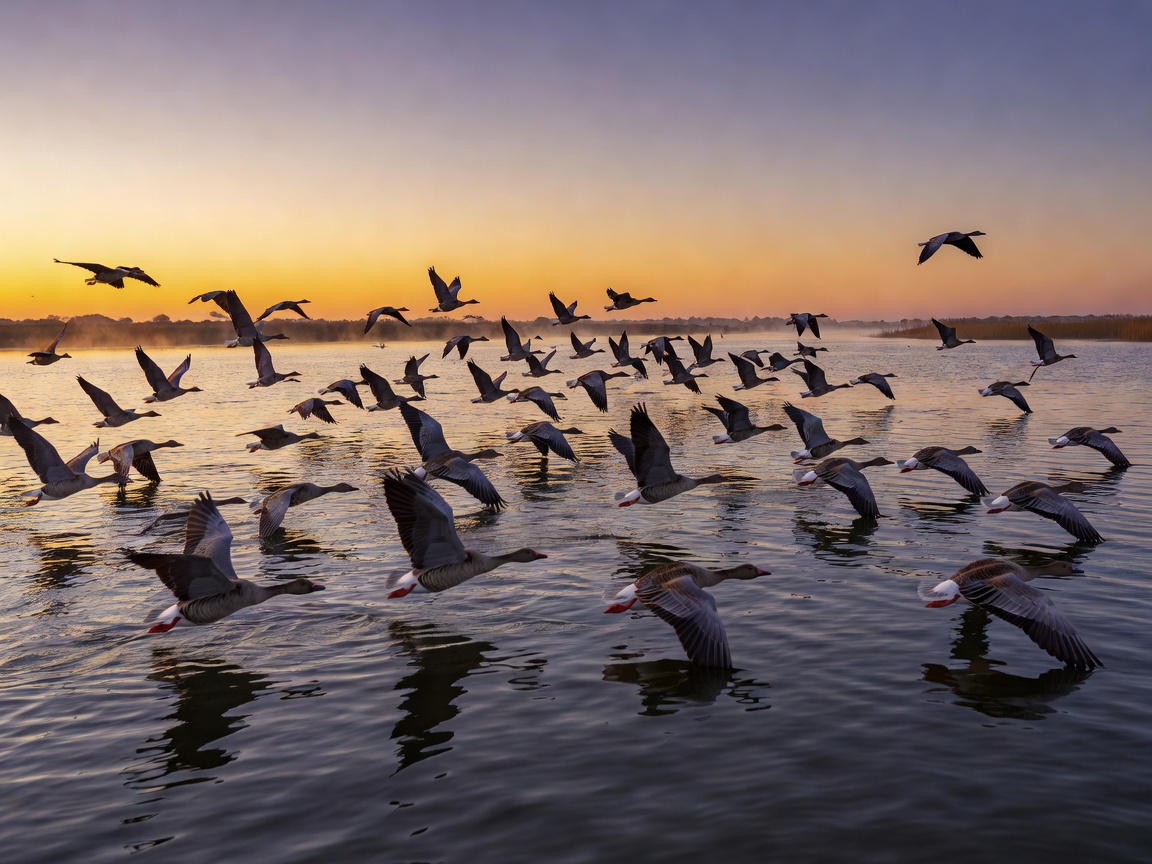
The Broads, spanning Norfolk and part of Suffolk, look like a natural wetland but are actually the flooded remains of medieval peat diggings — a landscape shaped by industry that nature then quietly reclaimed. Each autumn it becomes one of Britain's most important stopovers for wildfowl arriving from much colder places.
What the Broads actually are
The network of shallow lakes and connecting rivers that makes up the Broads formed when medieval peat cuttings, dug for fuel, flooded as sea levels rose. It's now managed as a national park equivalent by the Broads Authority and recognised as a wetland of international importance under the Ramsar Convention, largely because of exactly what happens here every autumn and winter.
Who arrives, and from where
Pink-footed geese begin arriving from breeding grounds in Iceland and Svalbard through September and October, gathering in numbers that build through the autumn as they settle in for the winter. Wigeon, teal and a range of other ducks arrive alongside them from similarly northern breeding ranges, drawn by the Broads' combination of open water, reedbed and surrounding farmland for feeding.
Where to watch
Hickling Broad, managed by Norfolk Wildlife Trust, is the largest of the Broads and one of the most reliable spots for both numbers and variety, with hides positioned for exactly this kind of viewing. Ranworth Broad, with its floating visitor centre, offers a gentler introduction and easier access for anyone not used to reserve hides. Both reward an early or dusk visit, when geese move between roosting and feeding sites in large, loud skeins.
Boat versus hide
Hiring a boat gives access to stretches of water a hide never reaches and suits anyone wanting to cover distance, but engine noise and movement can push birds further off than a quiet, stationary hide would. Which approach suits you depends on whether you want a broad look at the landscape or a closer, patient watch of a single spot — the Broads support both without one being the "correct" way to see it.
How it compares with Welney
WWT Welney, a Wildfowl & Wetlands Trust reserve on the Ouse Washes in Norfolk and Cambridgeshire, offers a comparable wildfowl spectacle centred on whooper swans and is generally easier to watch from heated hides at close range. The Broads trade some of that comfort and guaranteed proximity for a far larger, more varied landscape that includes navigable waterways, reedbed and woodland alongside the open water, making it a fuller day out rather than a single concentrated viewing point.
Getting there and good to know
Norwich is the practical rail hub, with onward bus or car access to Wroxham, often called the unofficial capital of the Broads, and from there to the reserves themselves. Daylight is short by late autumn, open water carries a real wind chill even on a mild-looking day, and some reserves restrict access to certain areas seasonally to avoid disturbing roosting birds — check current access notes before planning a route.